BREATHING LIFE INTO THE PAST:
PEPPERS GHOST & EGYPTIAN HEAD SCULPTURES
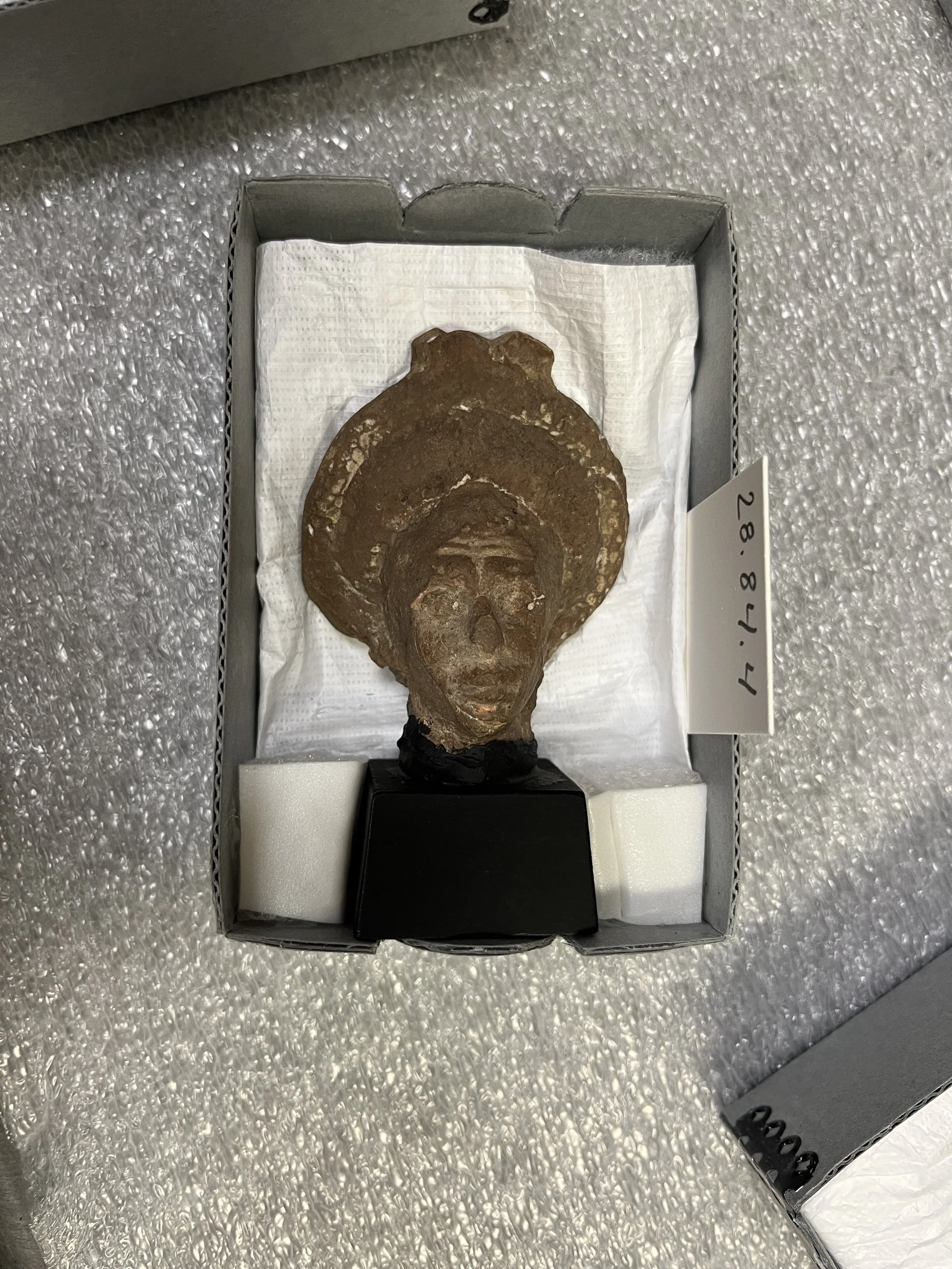
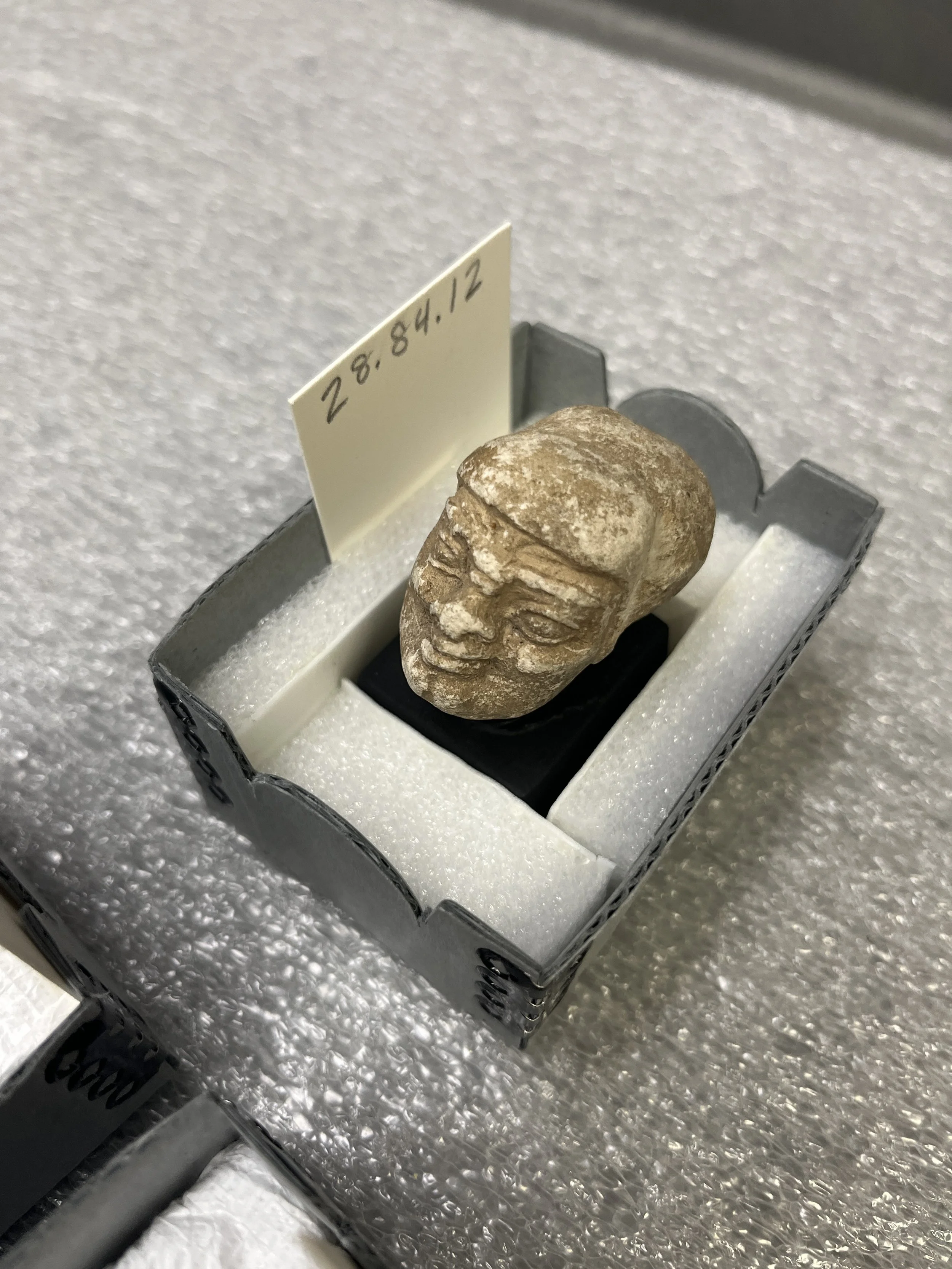
Female Head Ptolemaic Period (332-30 BCE)
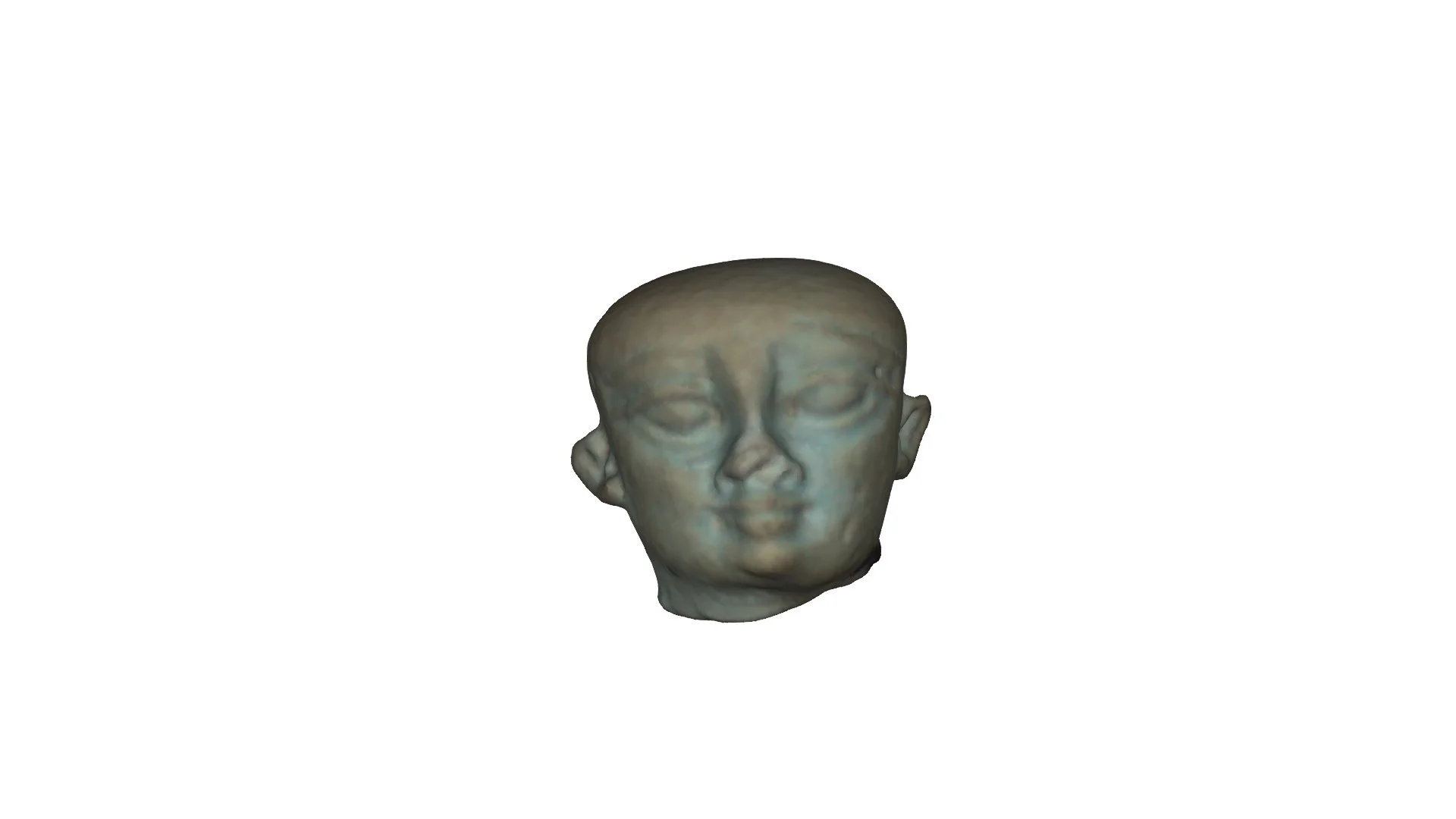
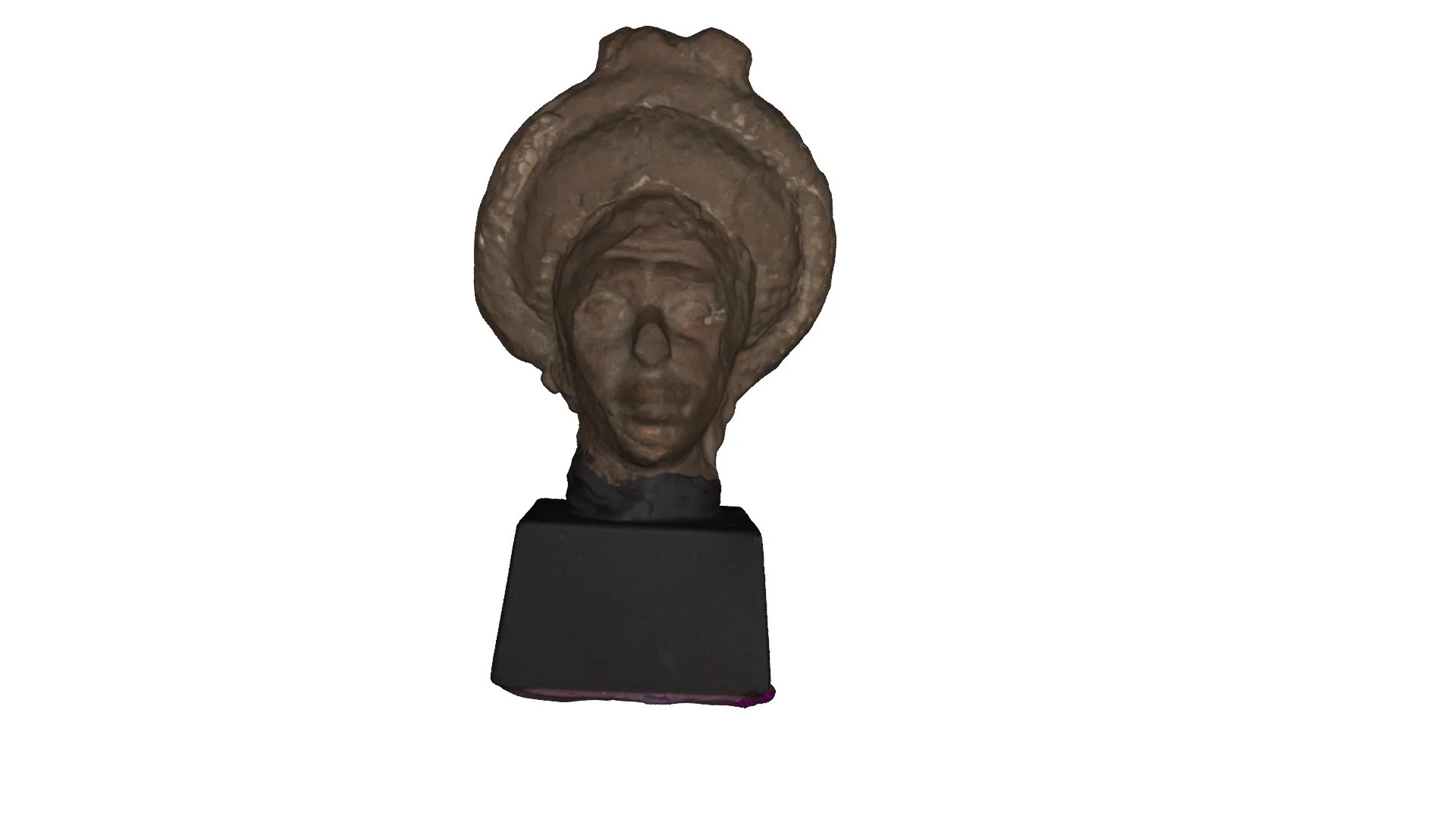
Harpocrates (332-30 BCE)
Female Head Ptolemaic Period (332-30 BCE)
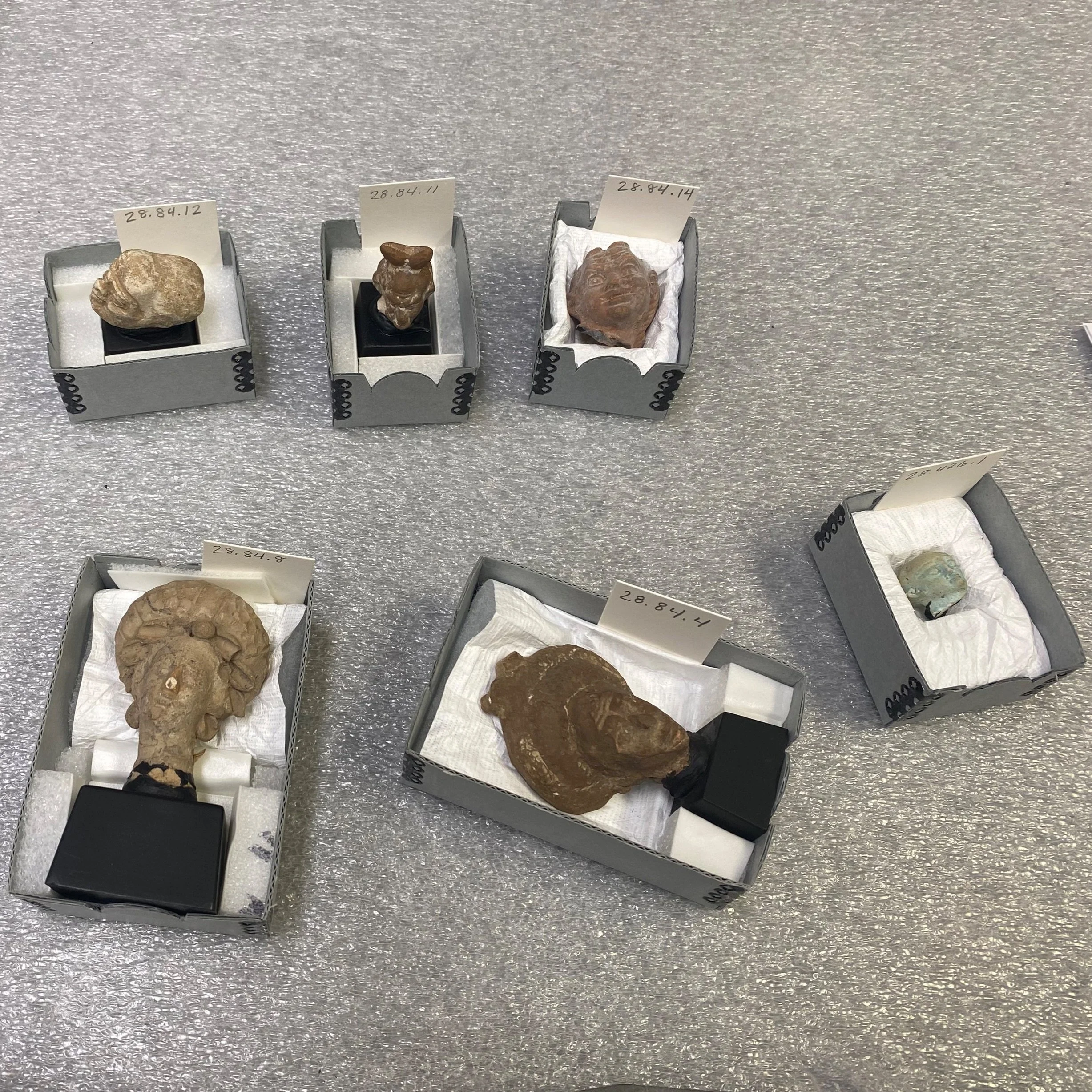
This project centered on a collection of enigmatic Egyptian heads whose original purpose remains a mystery. While their story may be lost to time, we wanted to give these ancient figures a voice in the modern world. The goal is to voice narrate and let these figures “speak” directly to visitors and share their history.
My role involved:
3D Scanning each head using the Artec Spider, to capture intricate details and features with high accuracy.
Processing the raw scans in Artec Studio, to create clean, high resolution 3D models.
Rigging in Blender, required preparing the digital surrogates for animation by rigging and weight painting the lips, mouth and cheek bones to ensure that voice narration by professionals in egyptology and language specialists can be performed.
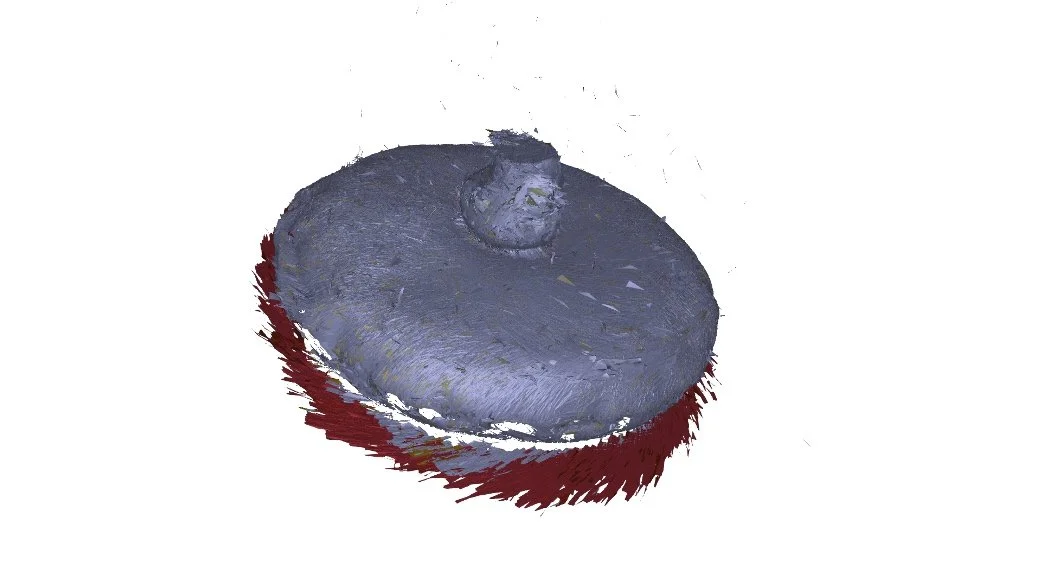
ARTEC STUDIO IMAGE PROCESSING
1.
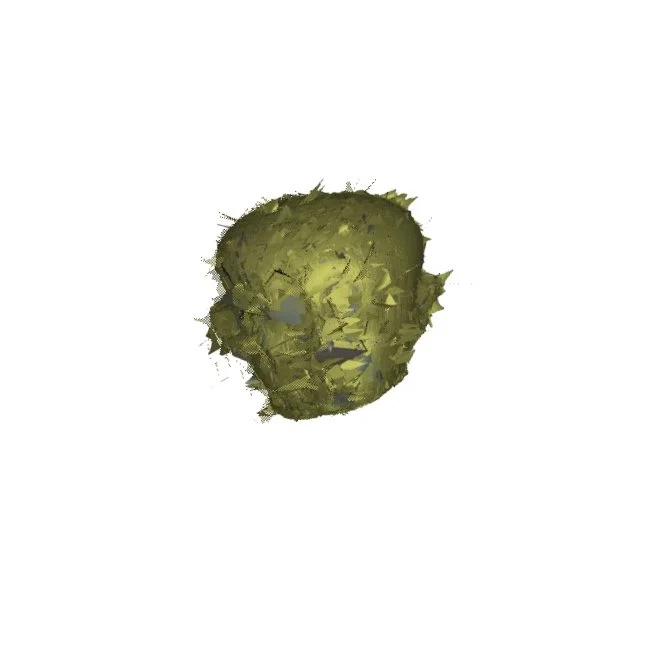
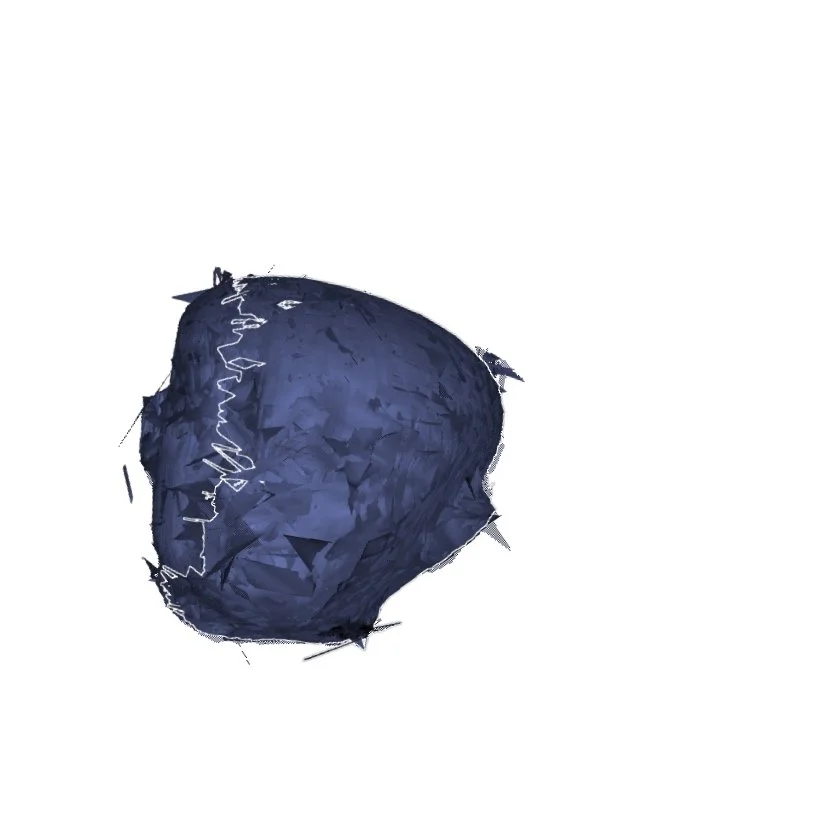
The initial object after being scanned with the Artec spider, requires a fine registration attempt to align the captured frames.
2.
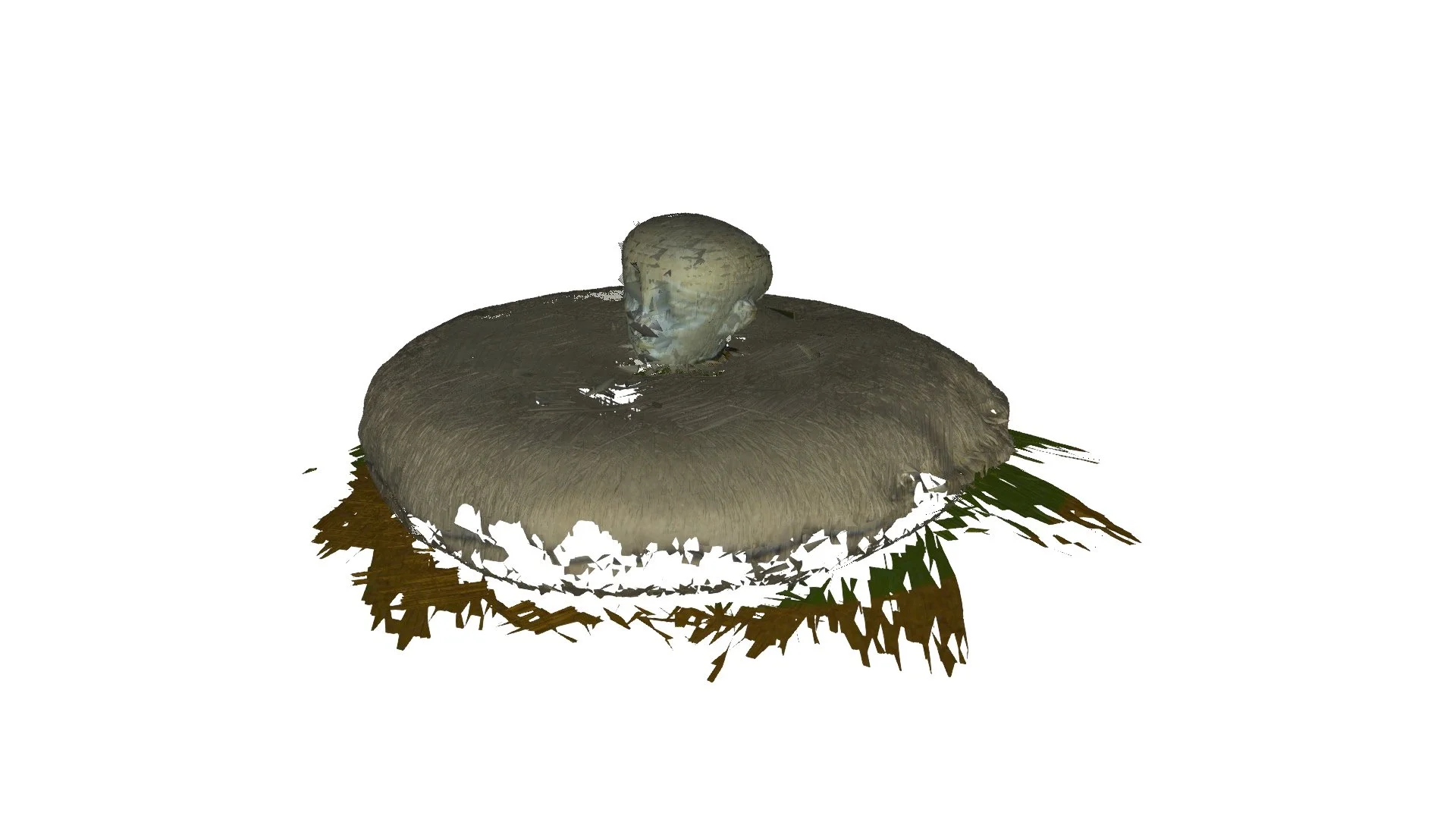
The bases of each scanned image are then selected and deleted to isolate the Egyptian head.
After clearing the base, the object its left and isolated. The object is registered globally.
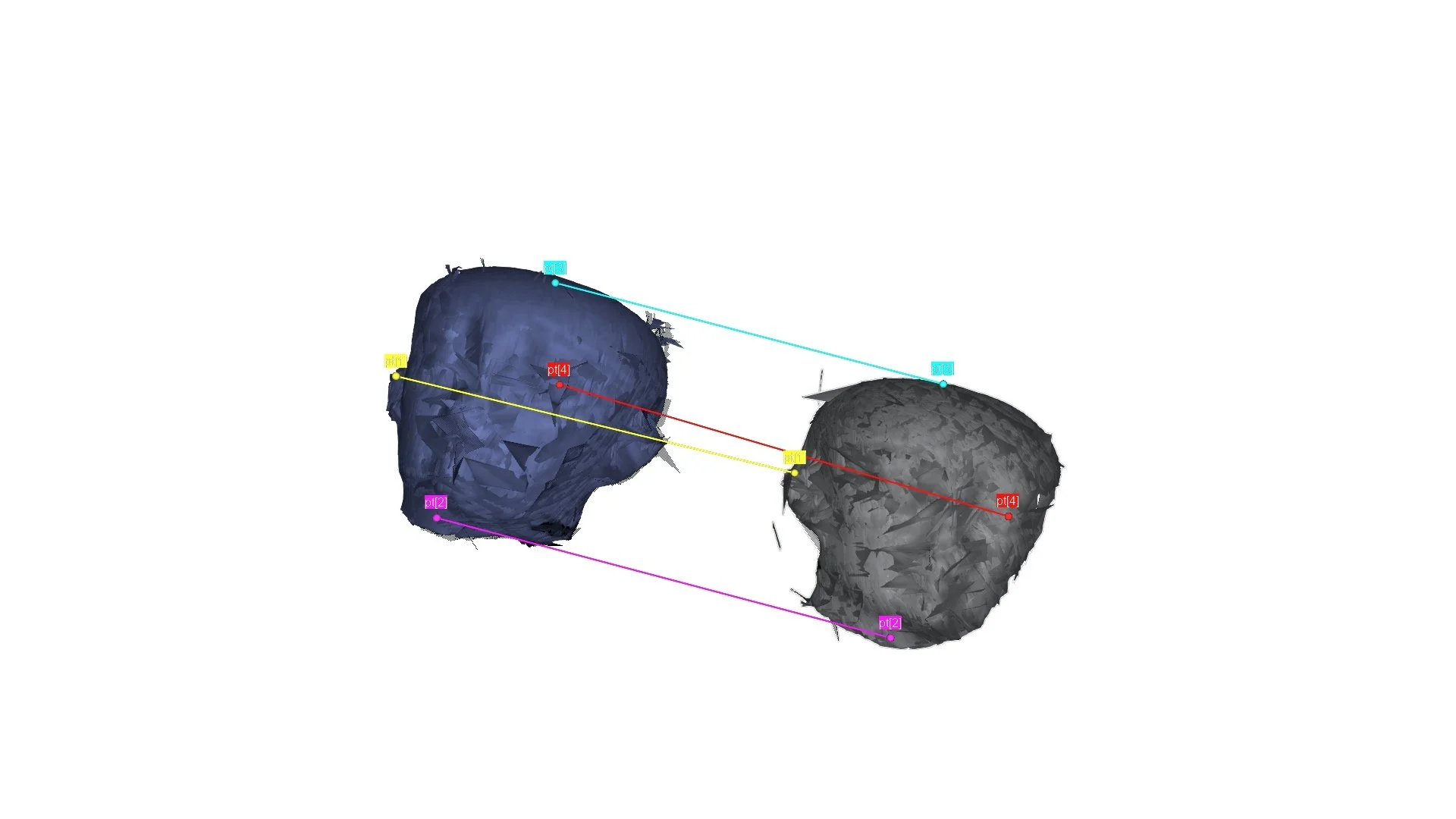
Alignment between all the surrounding scans of the heads are then attempted. Points of interest between each scan are carefully chose.
5.
After points are connected, the imaged scans of the object are successfully aligned.
6.
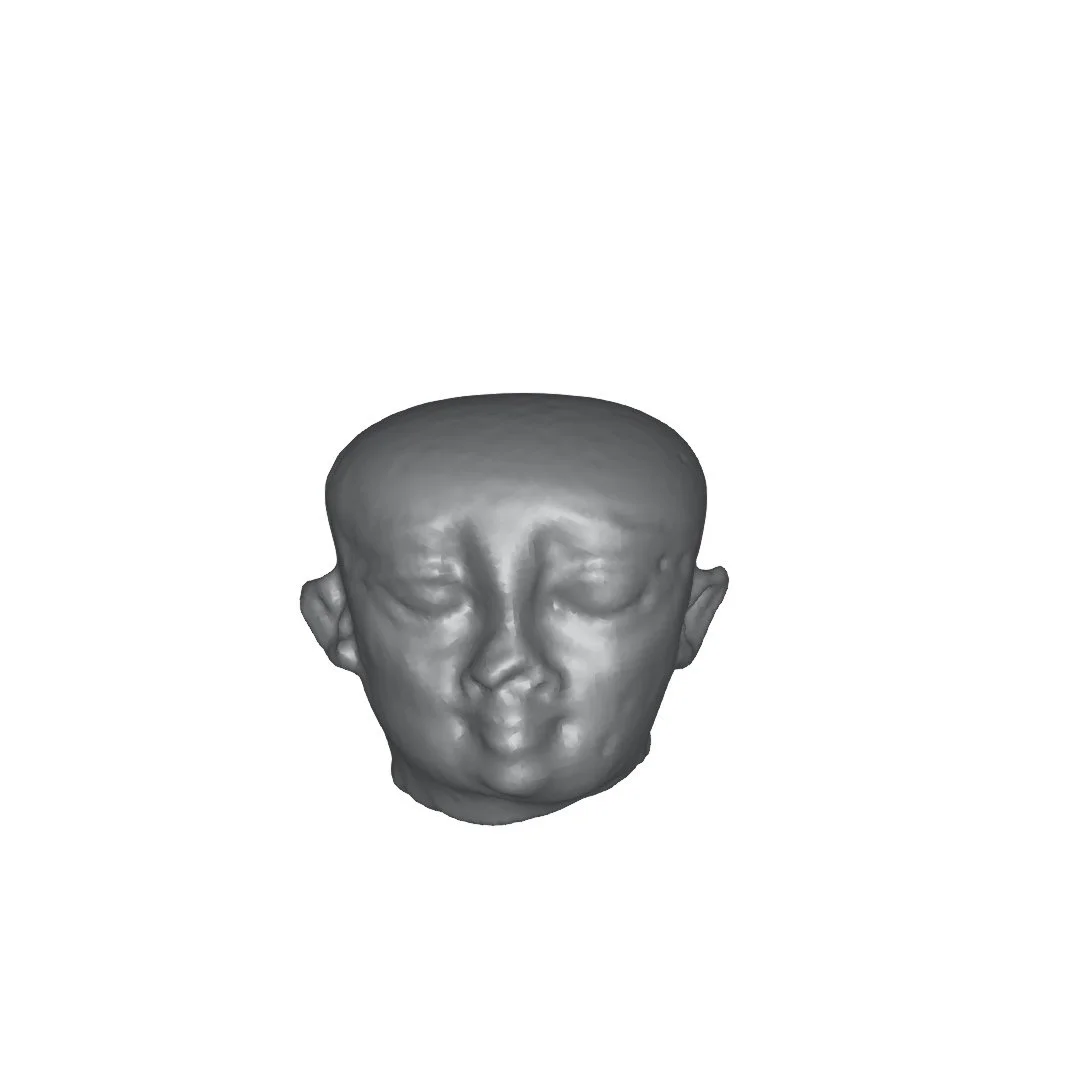
Global registration is then attempted to solidify the object after alignment into a single object that can be manipulated.
Mesh optimization is applied to clear small unseen details.
Sharp Fusion then applies the high level of detail, edges and features.
3.
4.
TEXTURING & UV UNWRAPPING
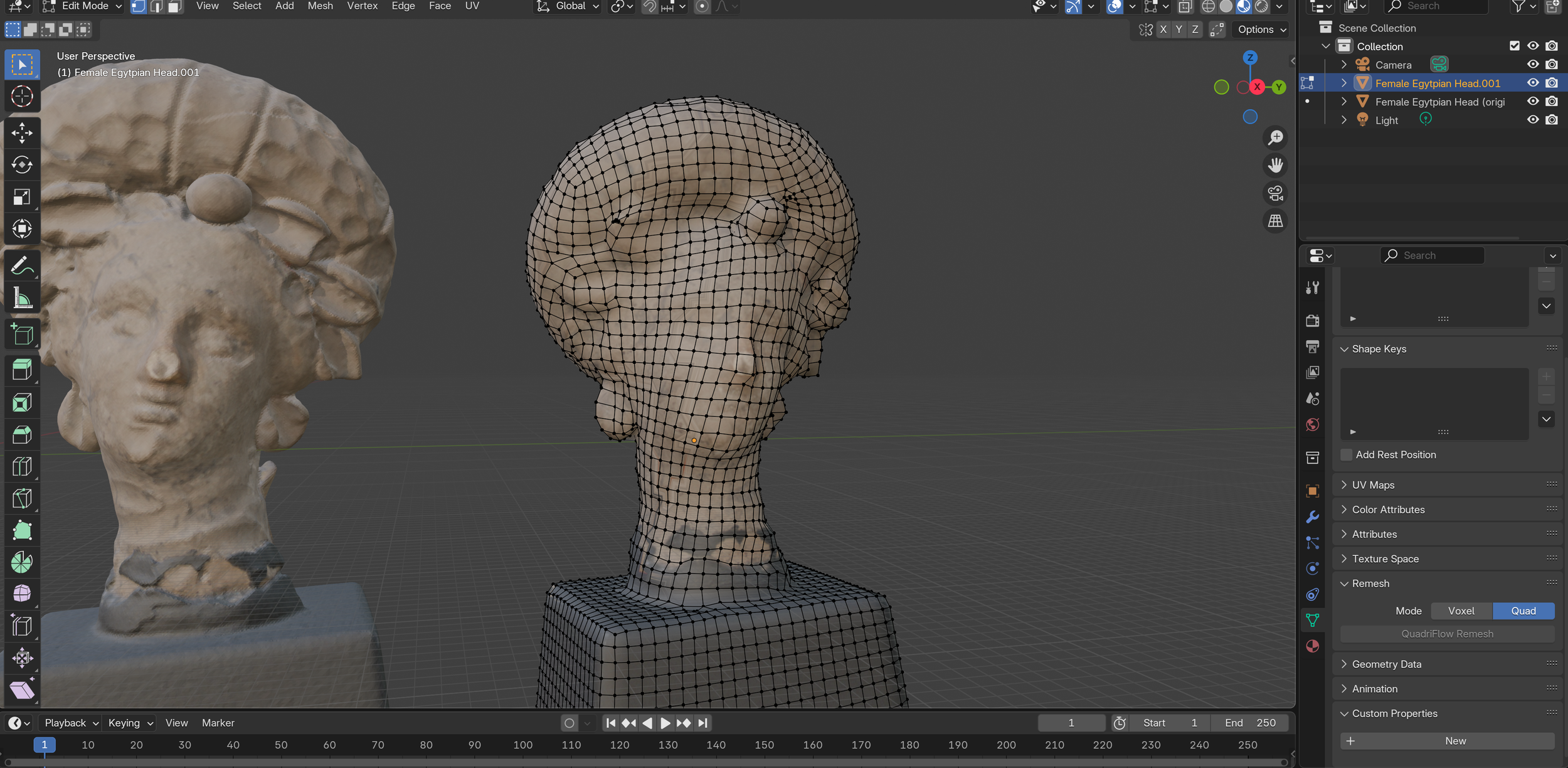
In order to properly rig and animate the heads while preserving accurate texture, color and detail I needed to unwrap the original textures from their high poly digitally imaged surrogates, to lower poly duplicates in Blender.
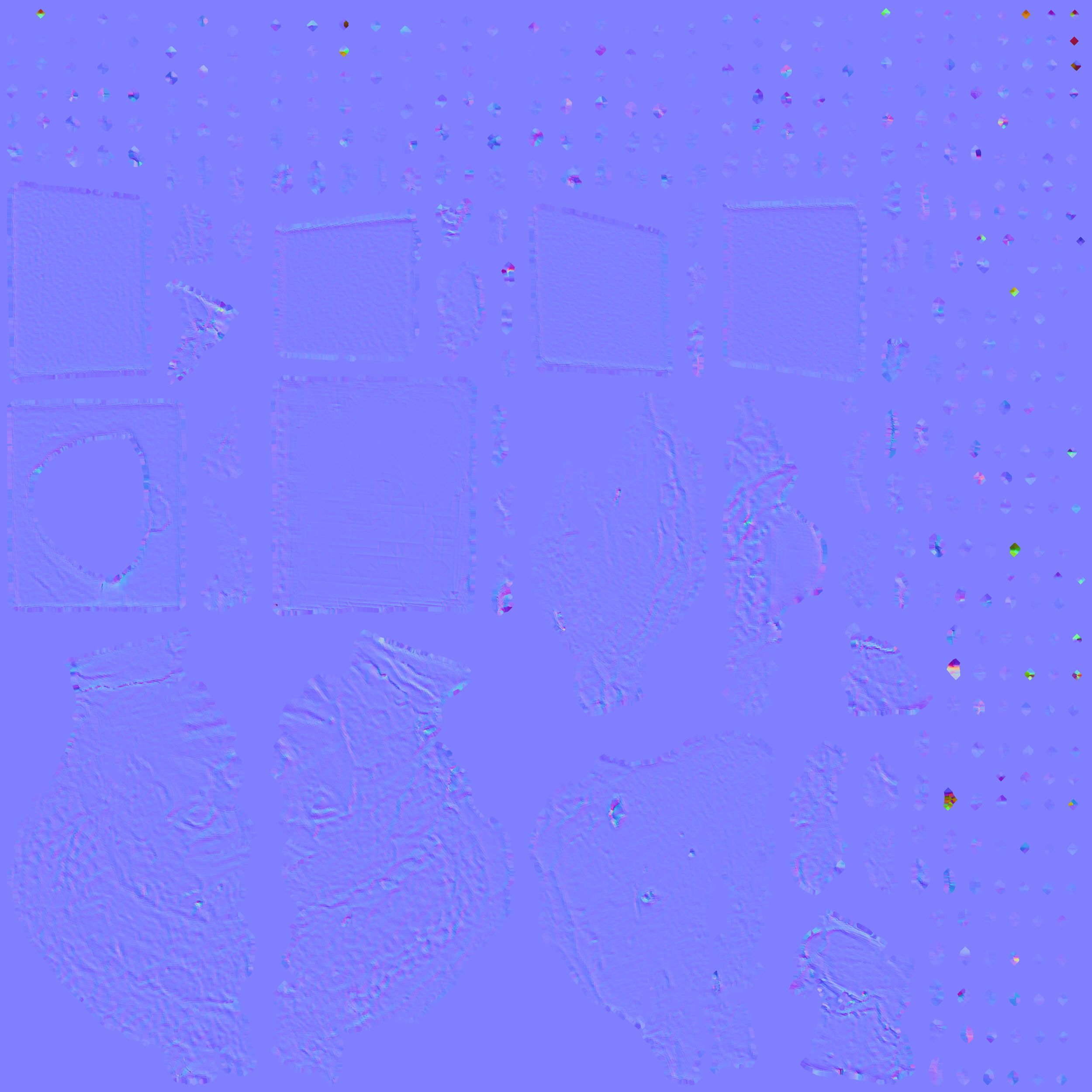
Normal
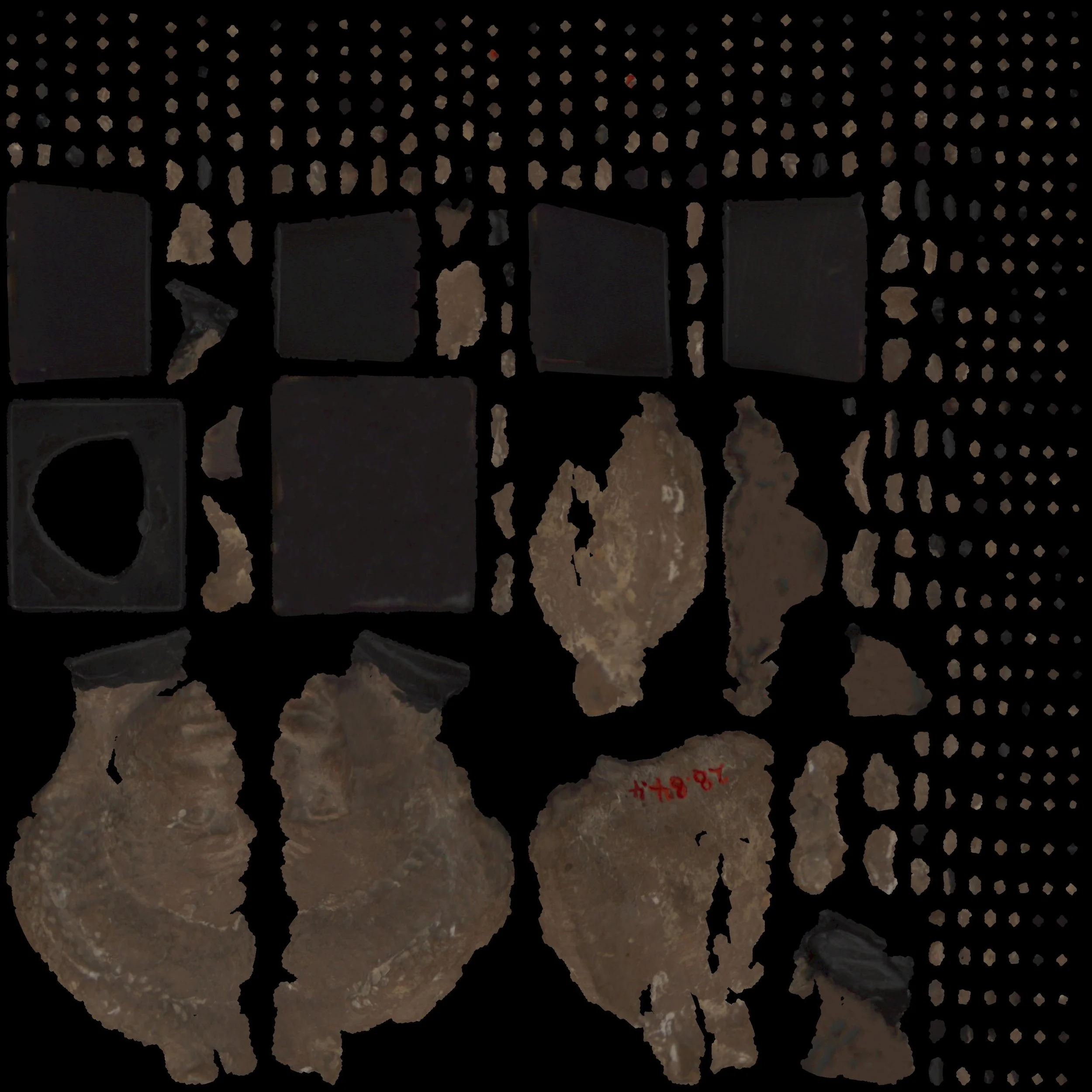
UV Unwrap

Normal
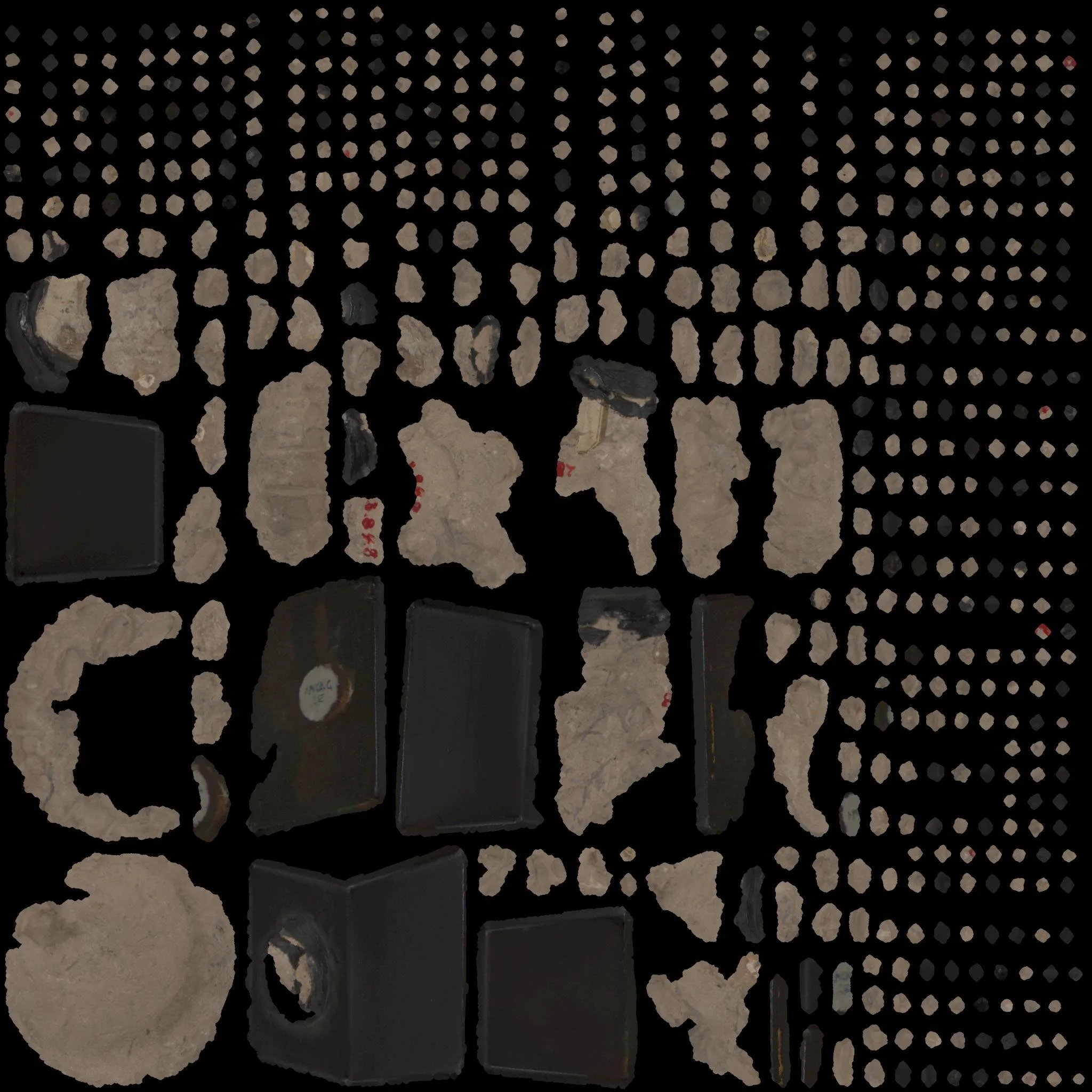
UV Unwrap
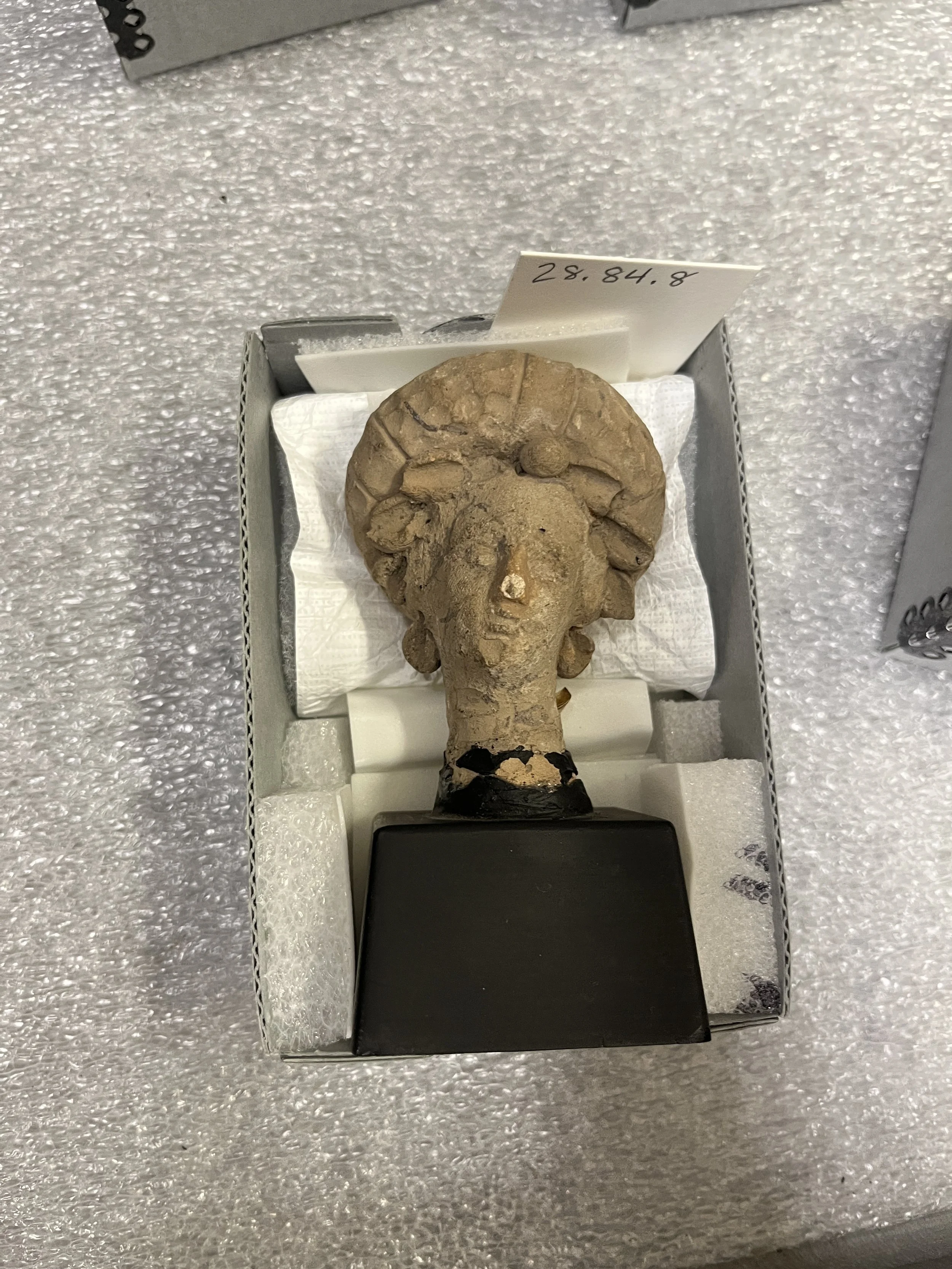

Normal
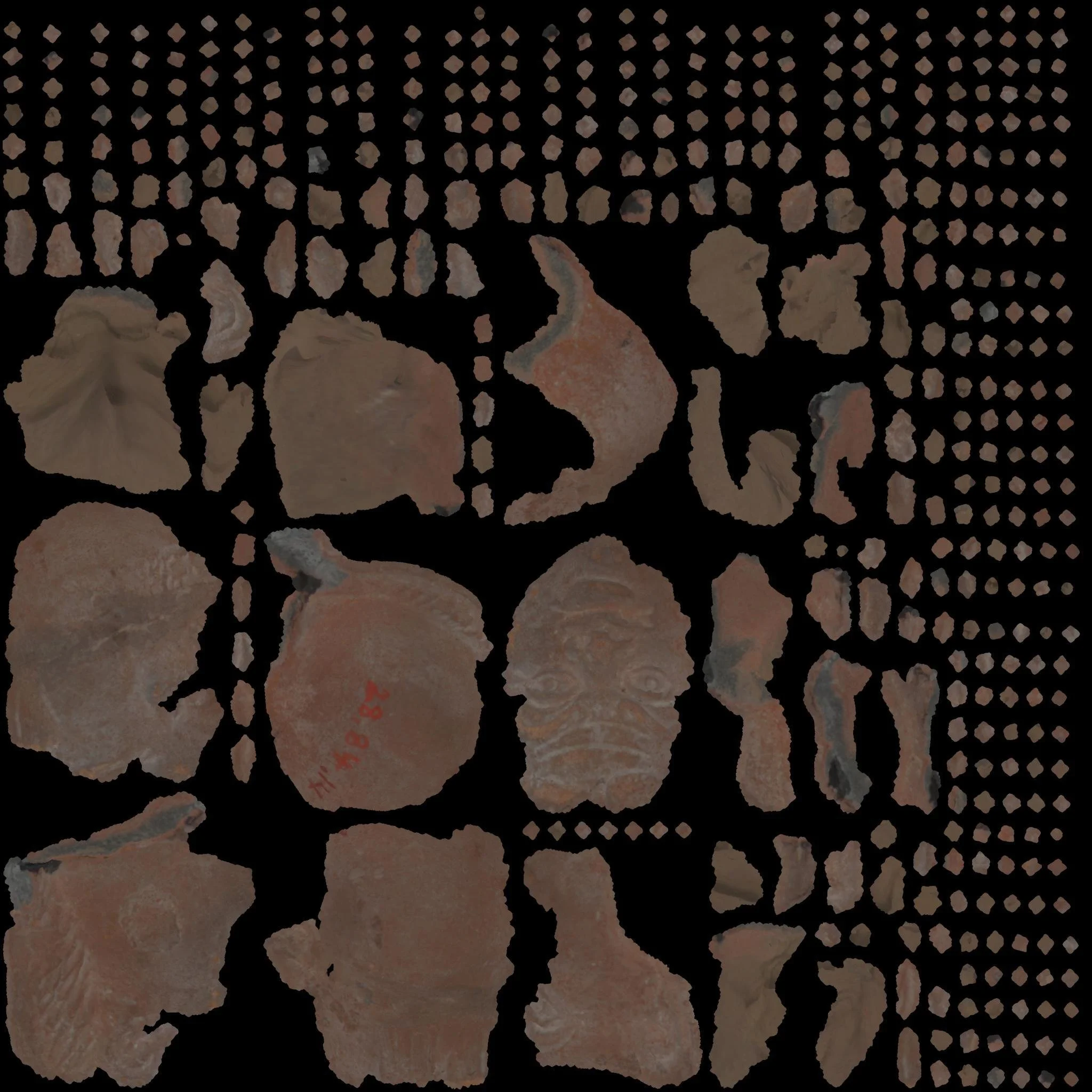
UV Unwrap
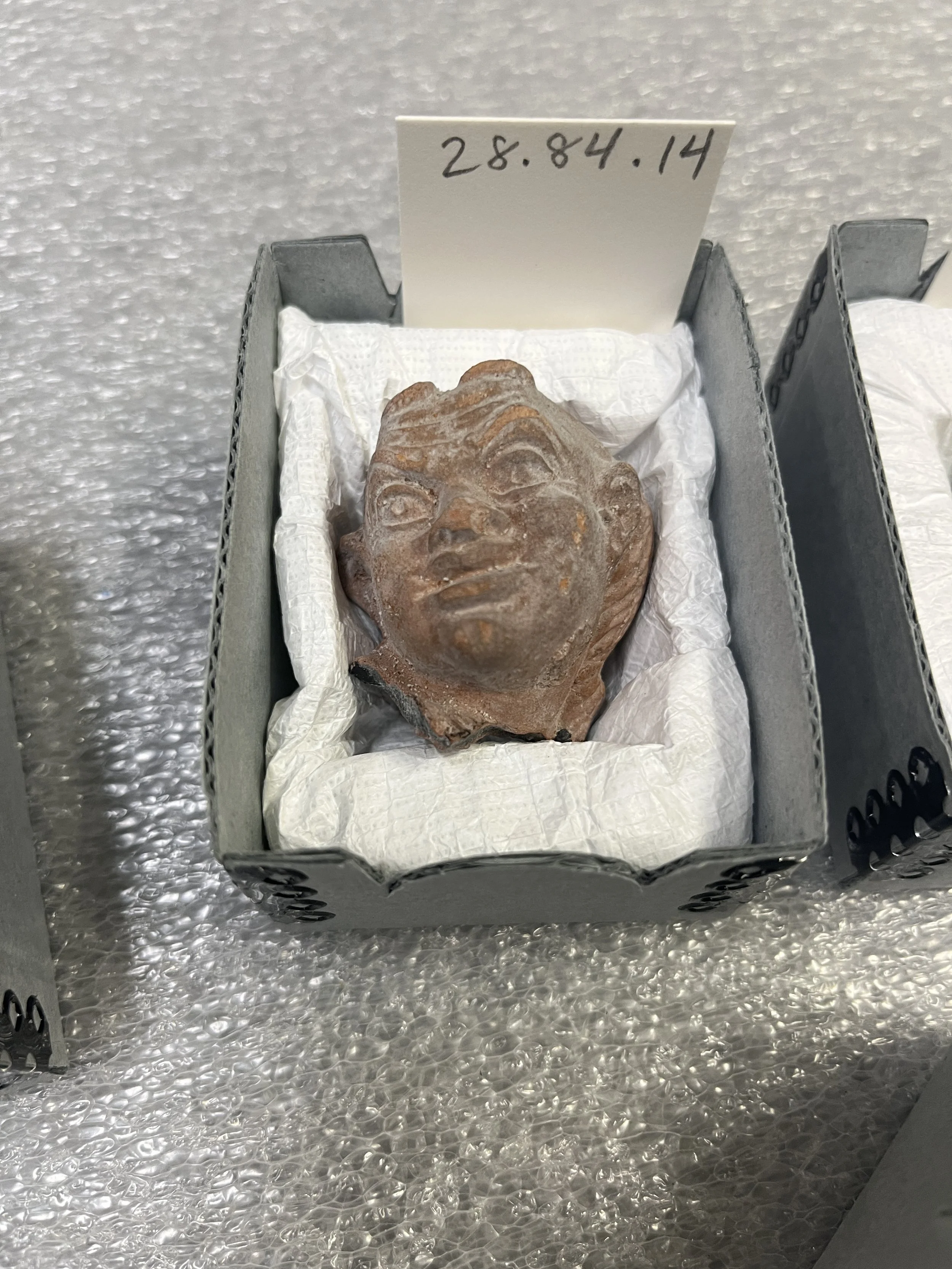

Normal
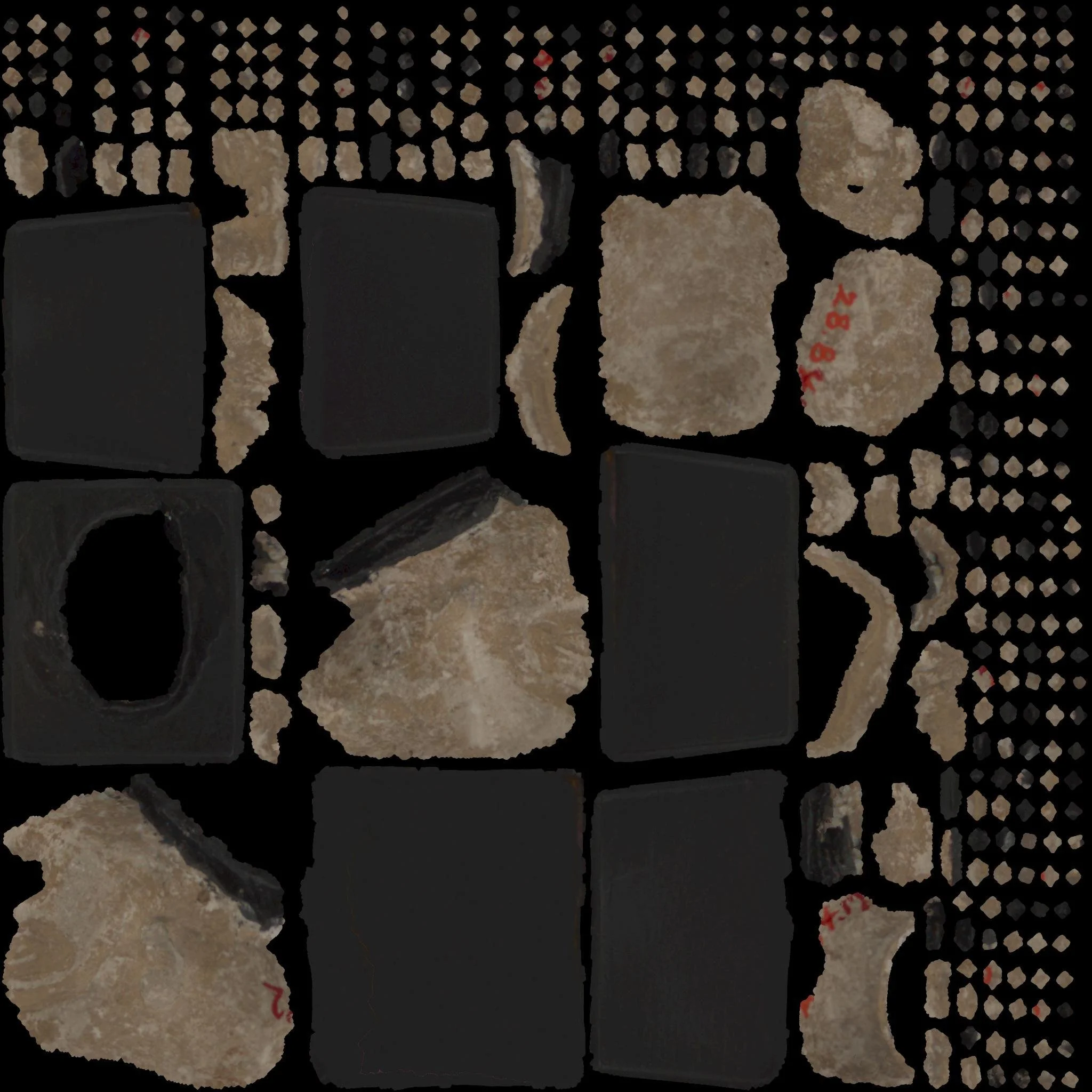
UV Unwrap
MODEL RIGGING IN BLENDER
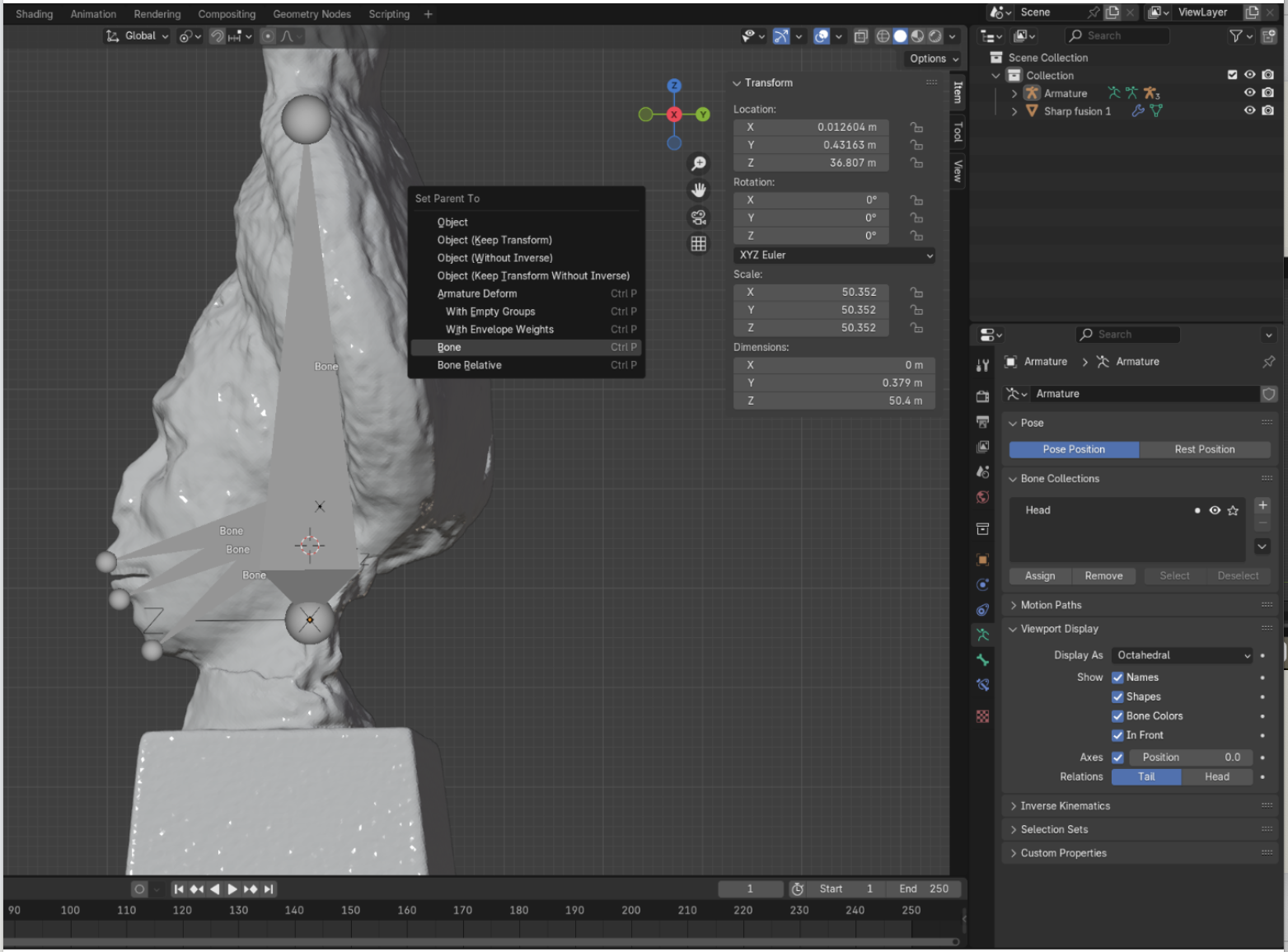
To create movement, armatures were needed to create a skeleton like structure for the head, base, upper lip, bottom lip and chin
Lips and chin armatures were “parented” to the base armature and head armature to ensure unity in the flow of the mouth and to replicate jaw movements.
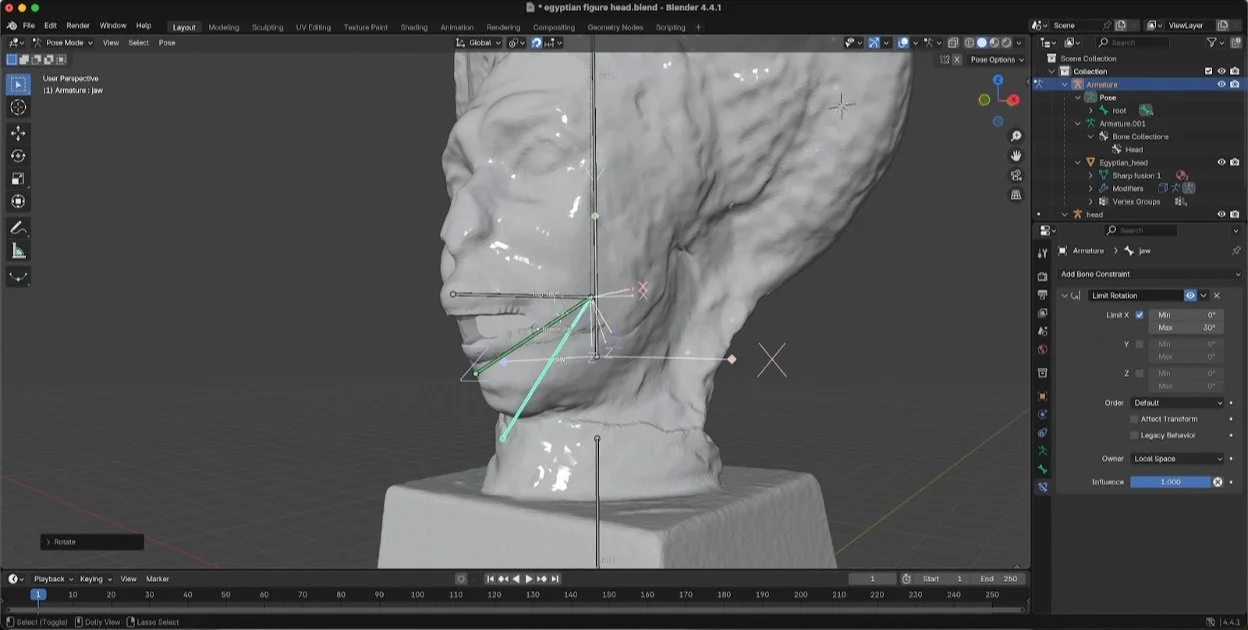
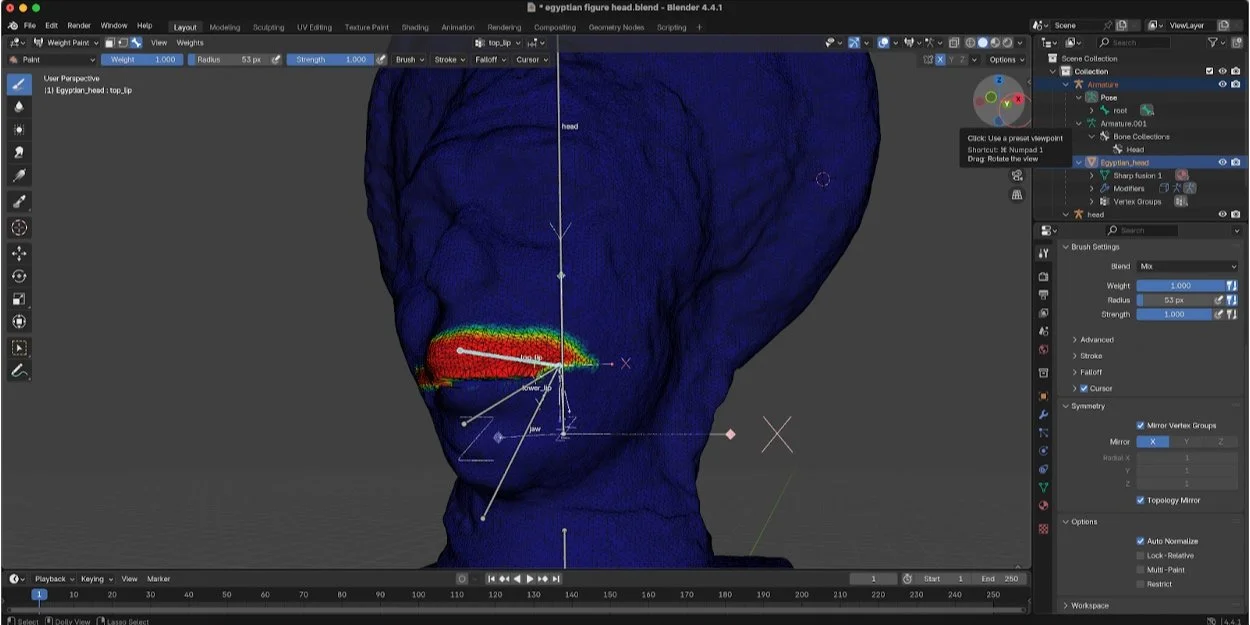
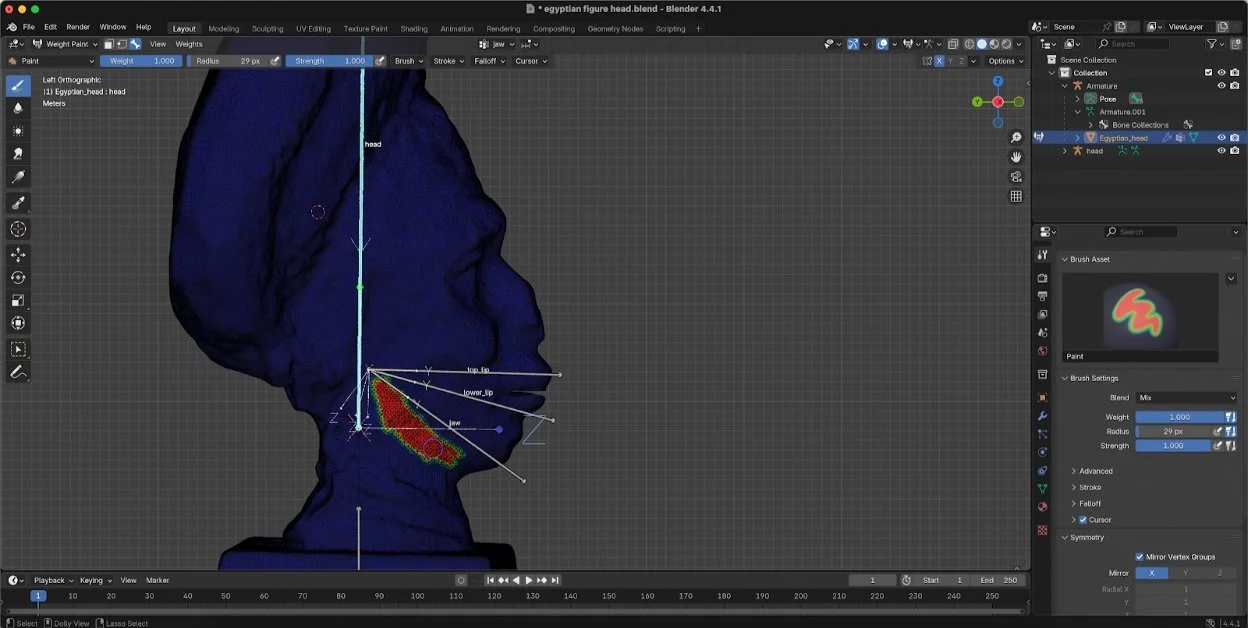
To simulate realistic mouth and jaw movements, each section of the mouth area and lower head: lips, chin, jaw and cheeks, were ‘weight painted’.
Red areas simulate areas that will be affected in relation to the armature that specific part is connected to.
Problems & Resolutions
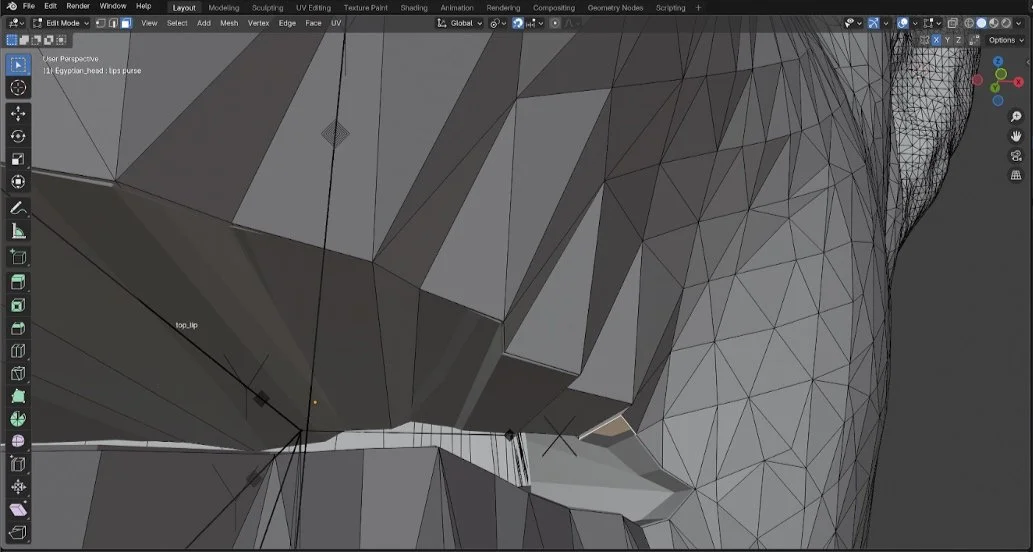
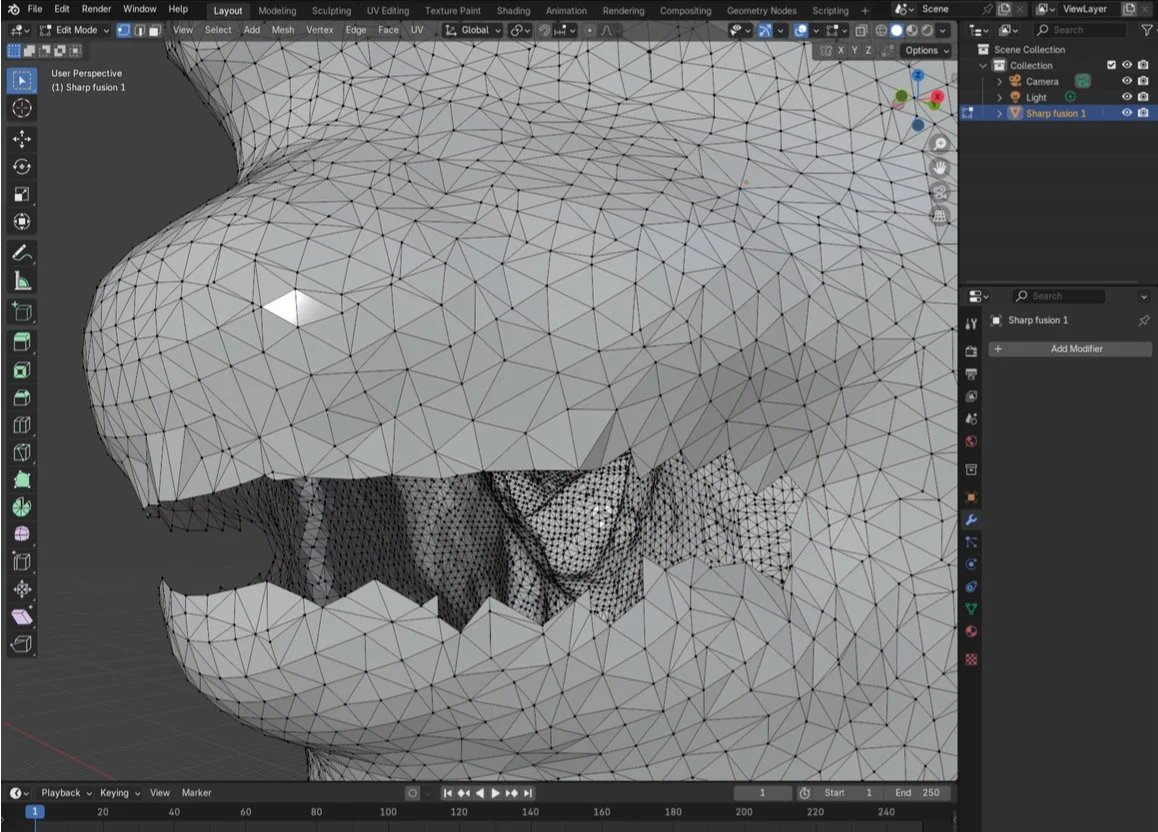
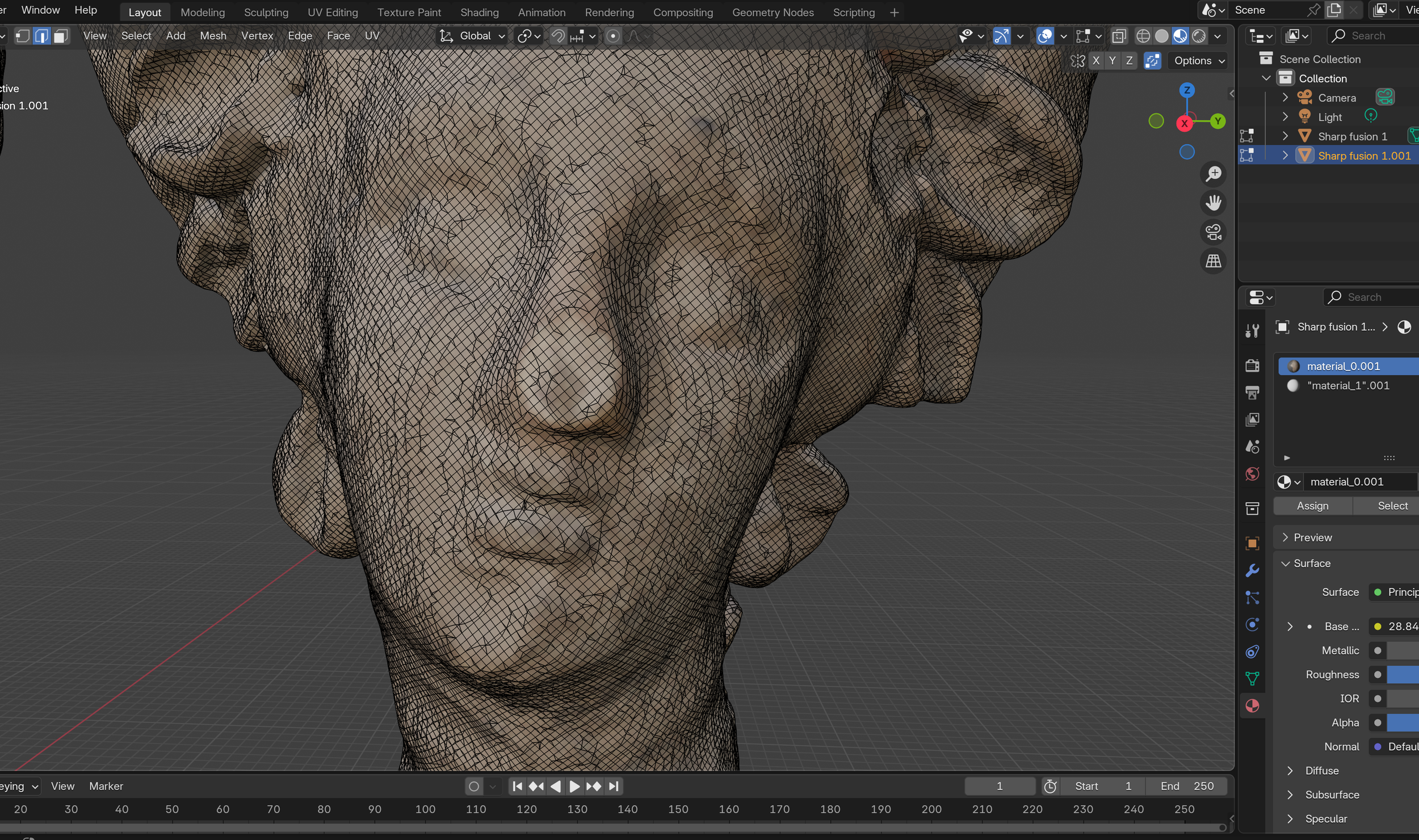
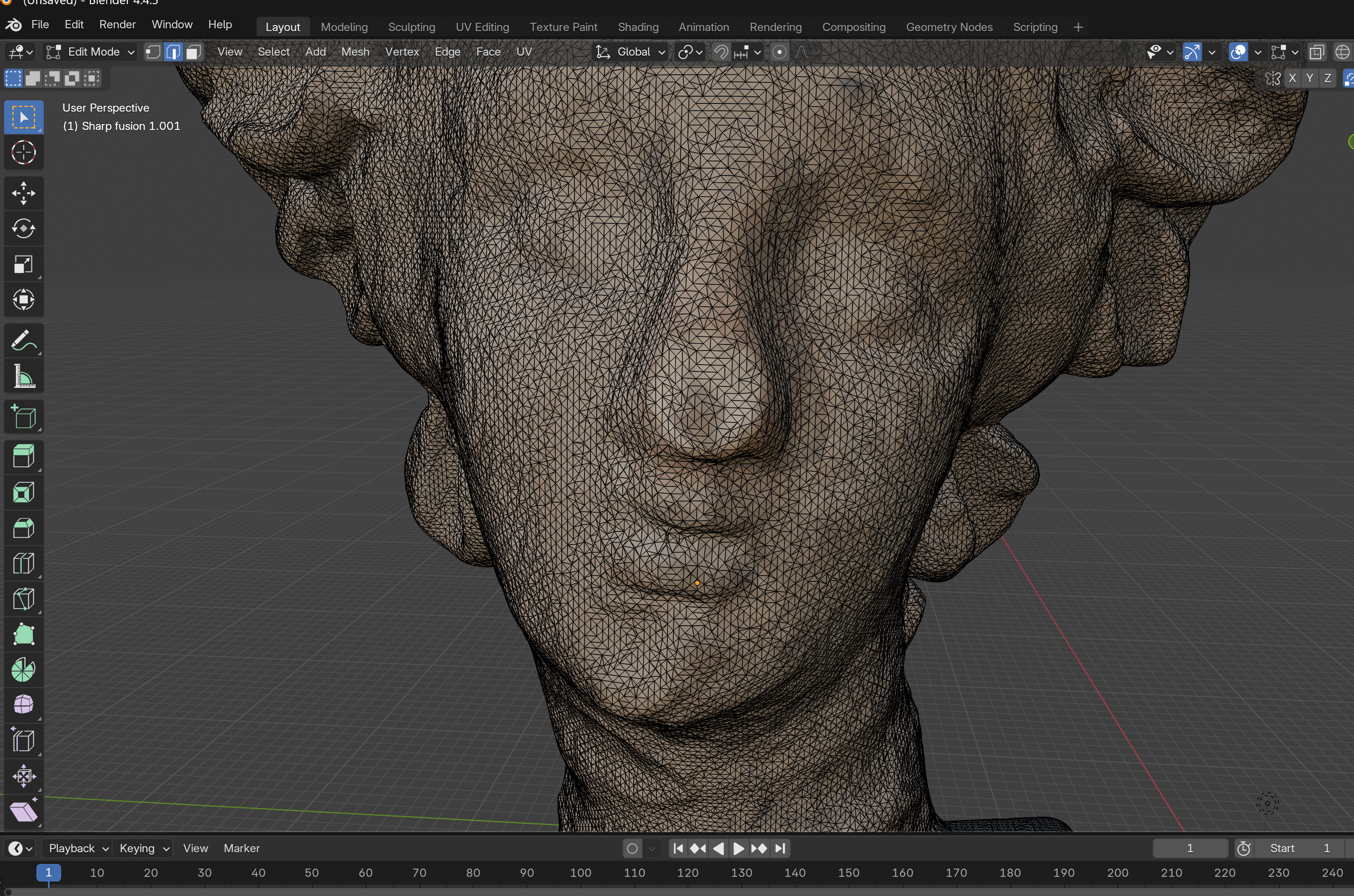
Due to importing the model from Artec into Blender, the topology of each vertex had to be adjusted and aligned as much as possible.
Initially, I attempted sub-division and applying a solidly modifier. I also attempted re-meshing however it only affected the overall look of the mesh, not the vertices.
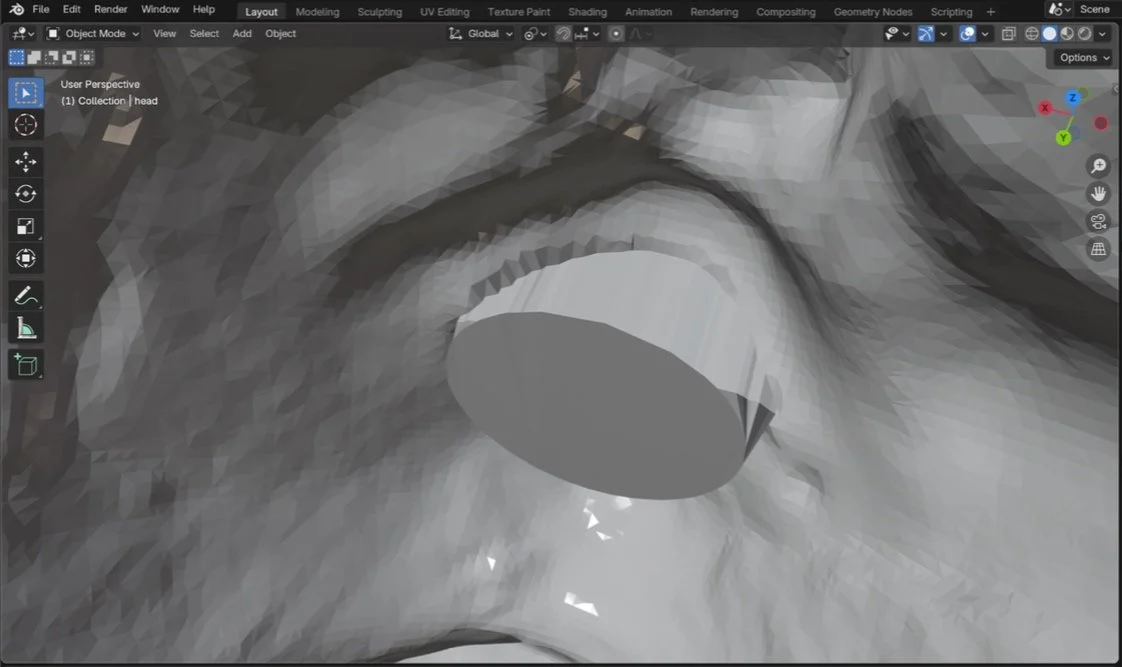
The topology also made the interior of the mouth difficult to model thus animating the mouth would appear jagged and dislocated.
Initially, to create a hollow appearance for the interior of the mouth, I applied a circle to the ends of the lips that were extruded.
The uneven vertices around the lip portion made it even harder to animate and add greater ranges of expression due to the jagged attempts I made at aligning the vertices up.
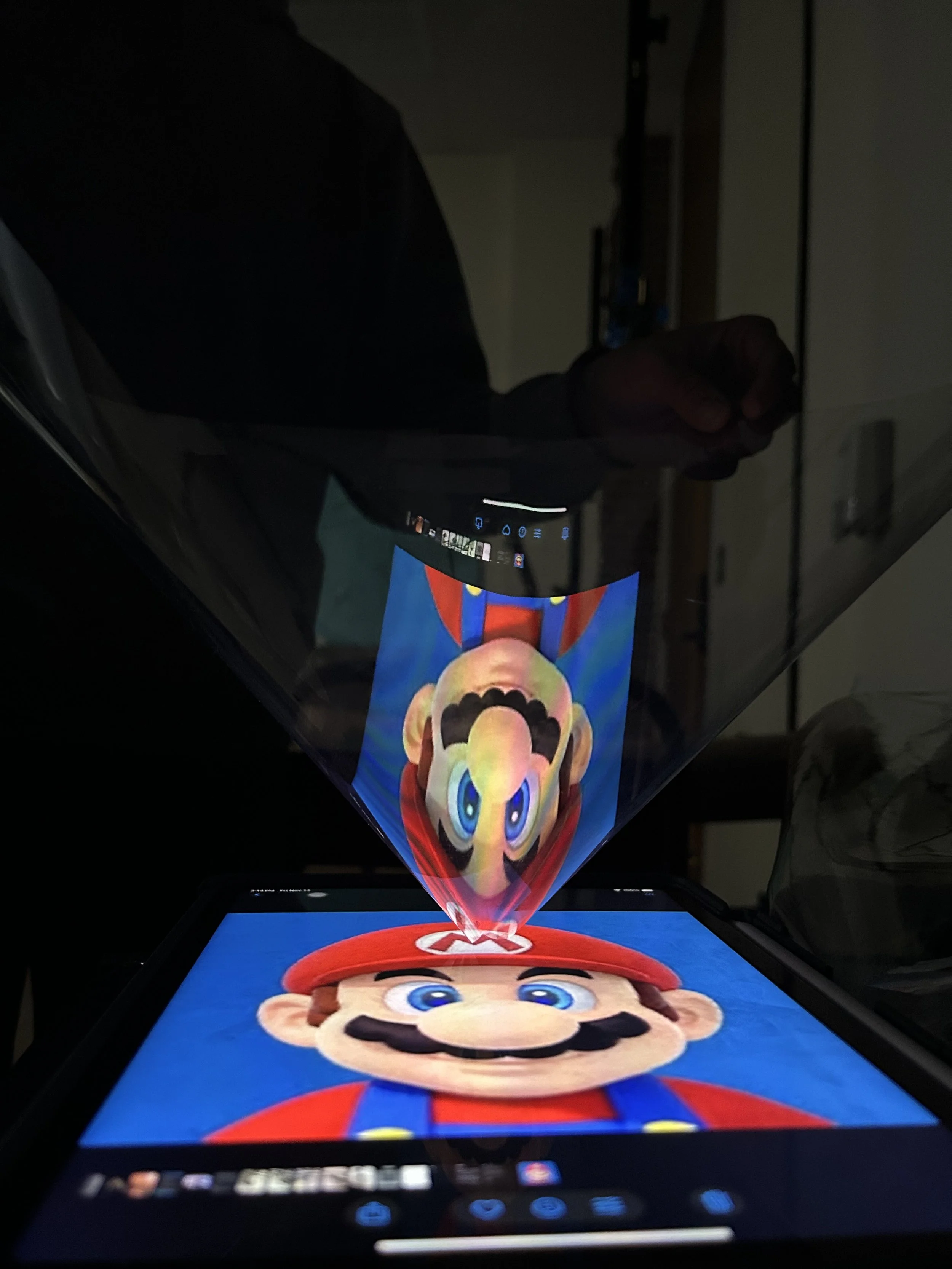
Regular Plastic
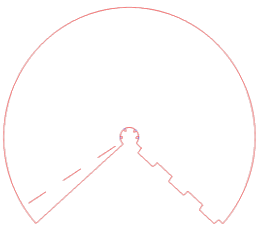
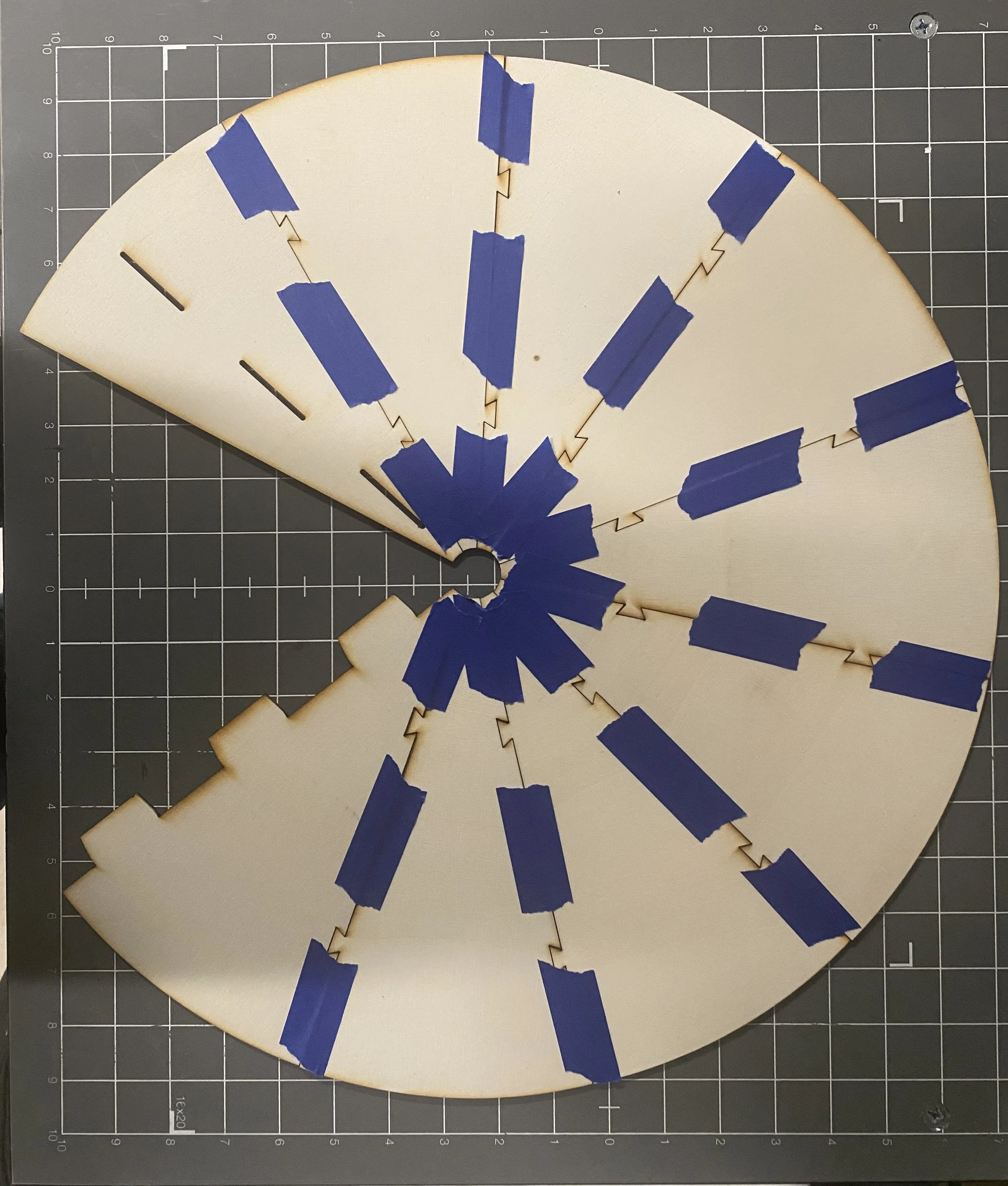
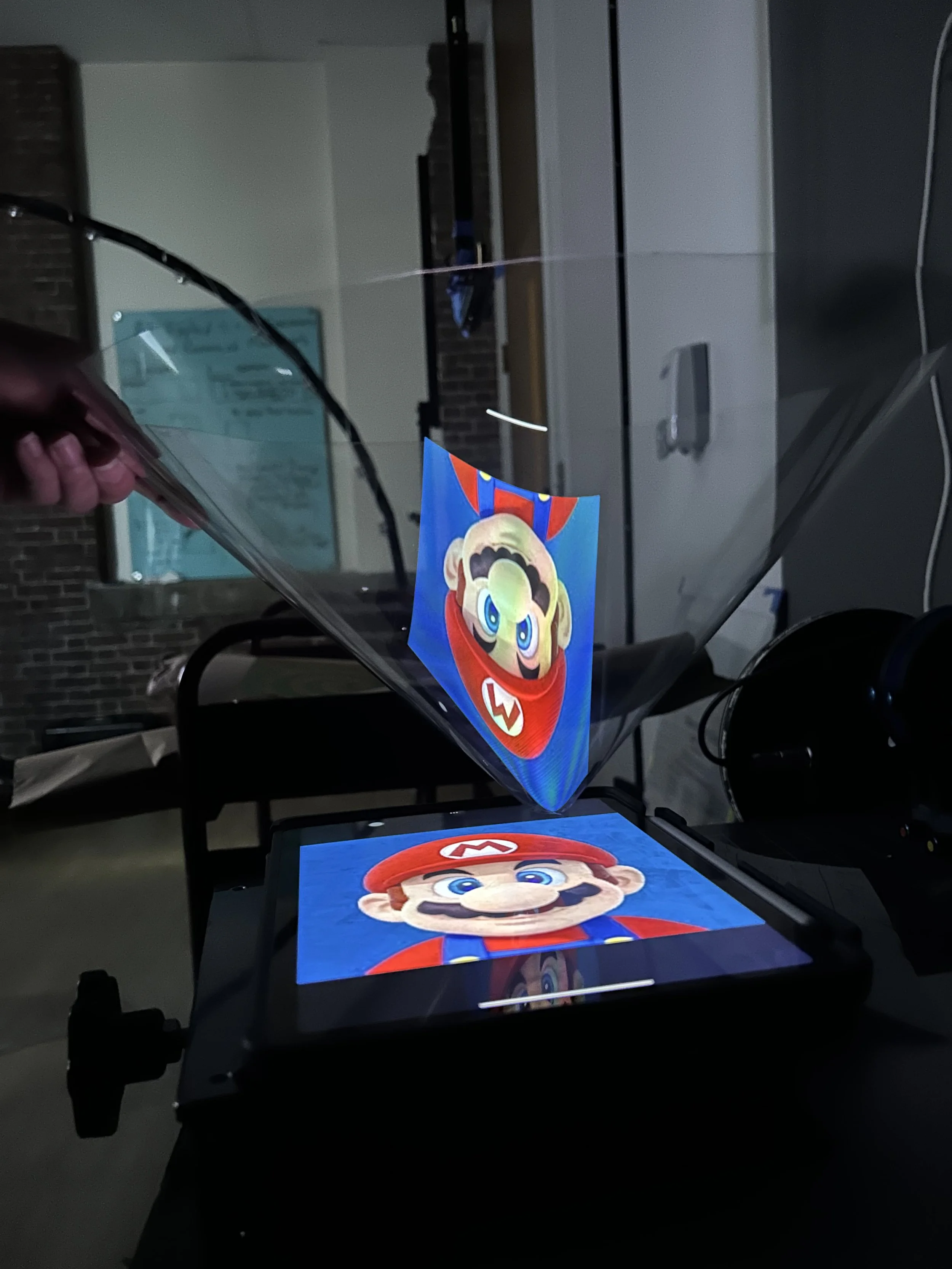
Peppers Ghost Cone Design
PTEG
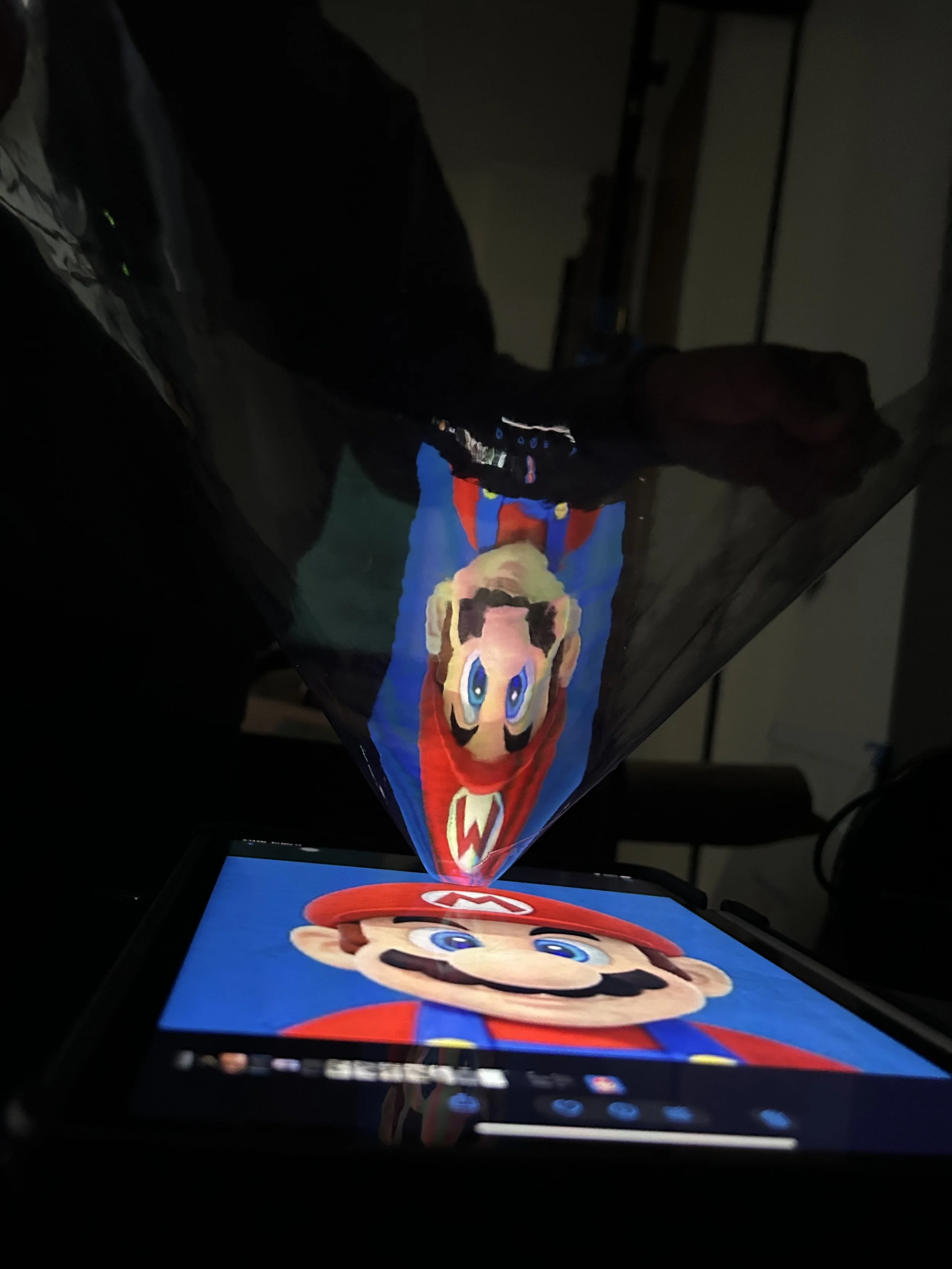
VINYL
FINAL RESULT
WORK NOT FINAL